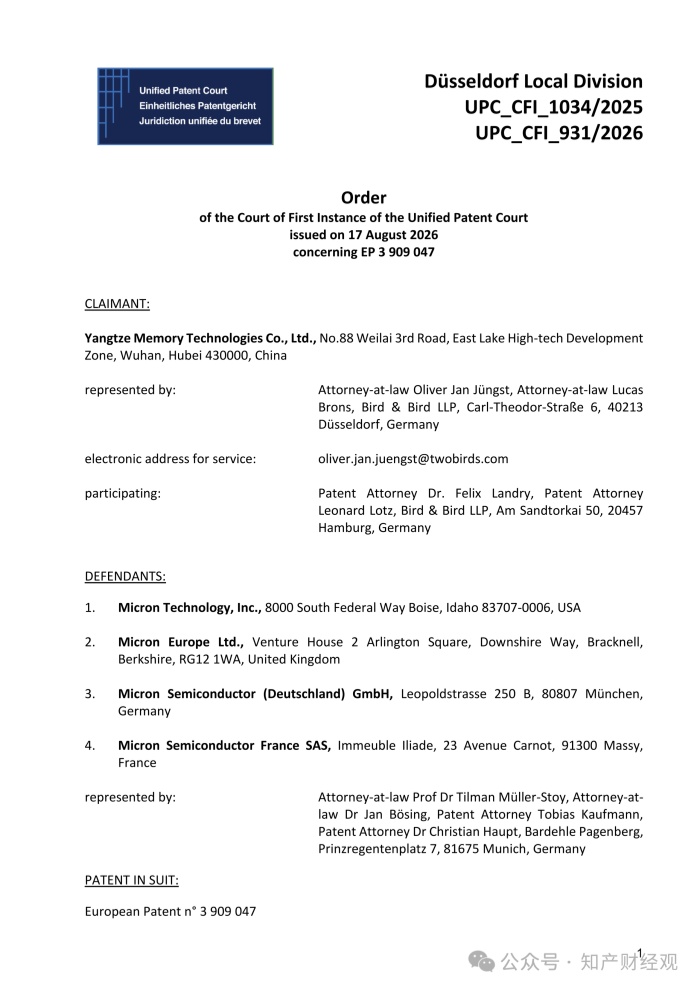
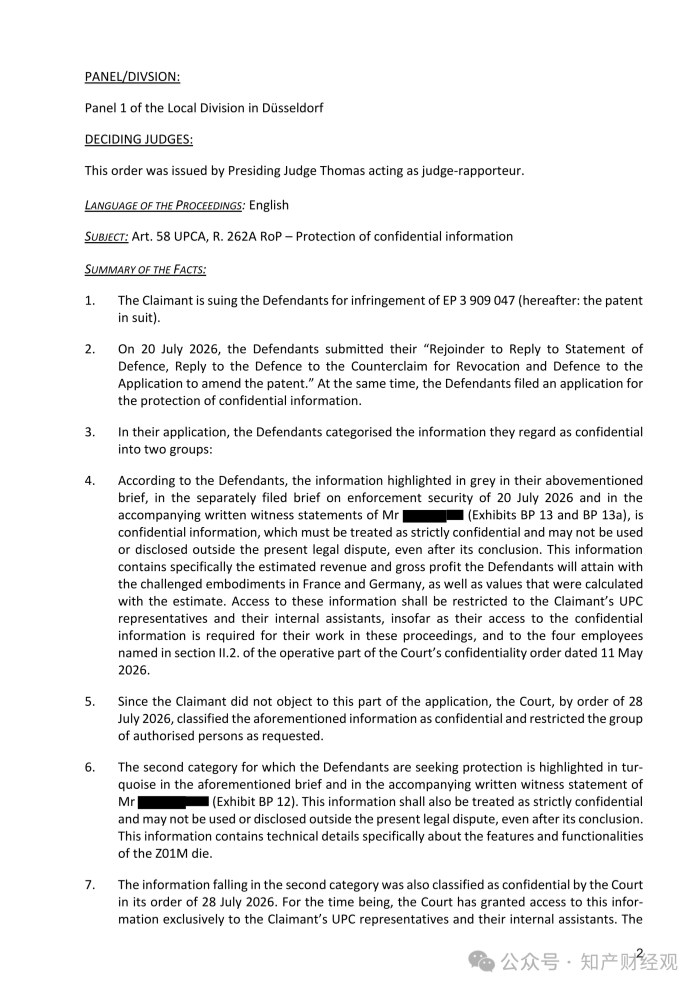
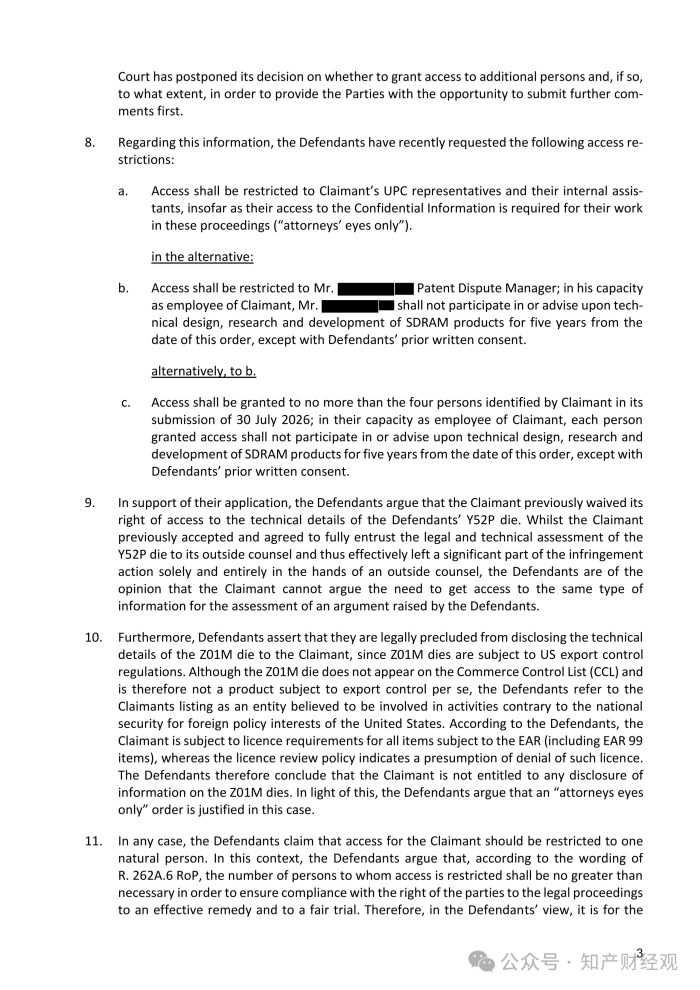
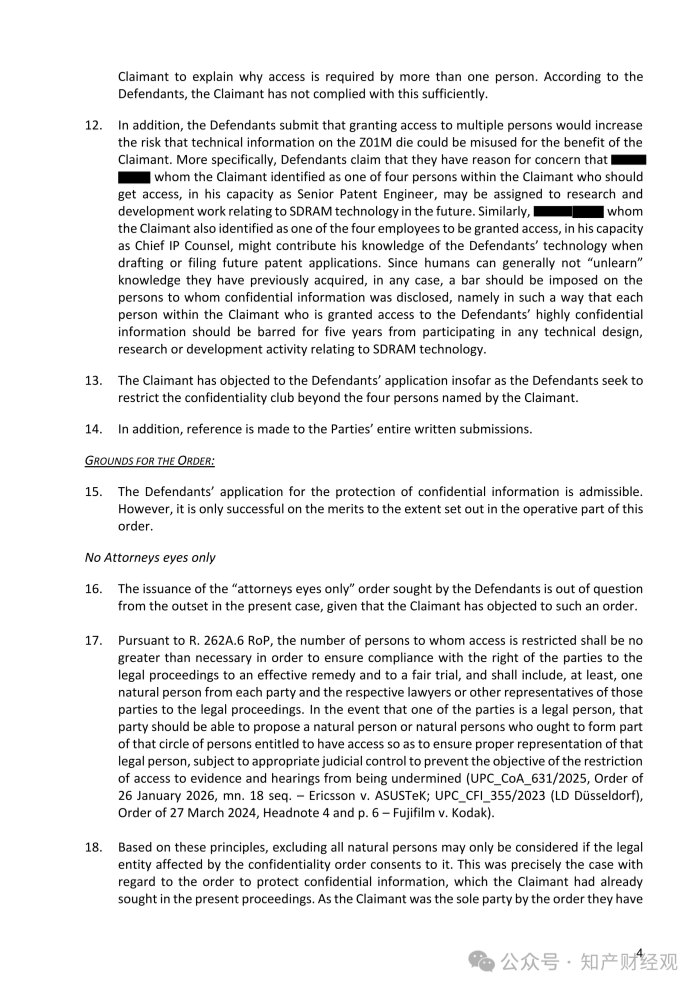
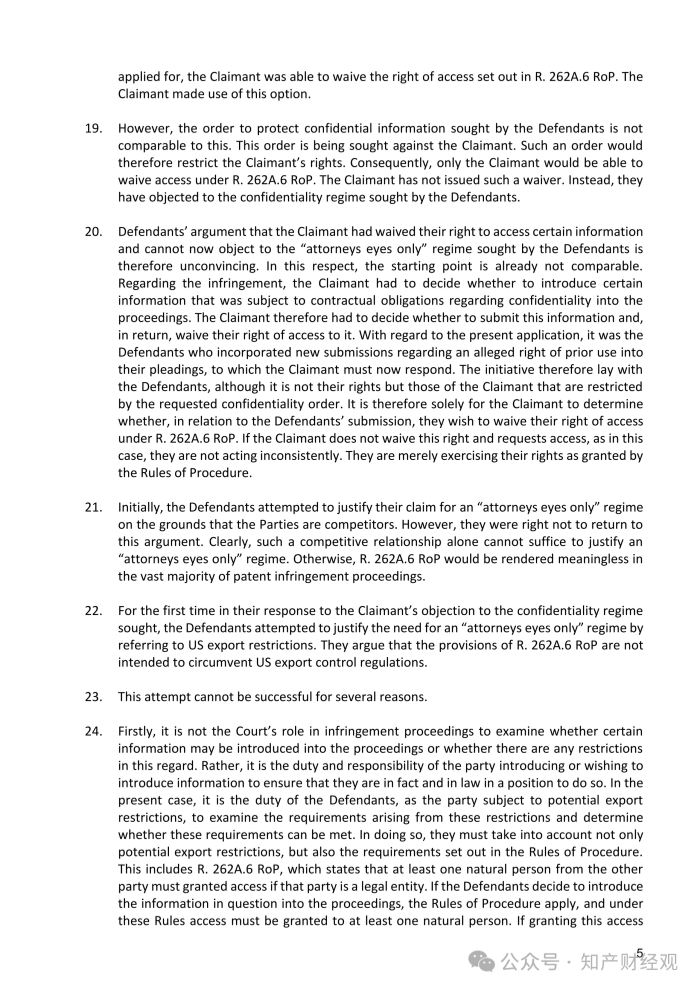
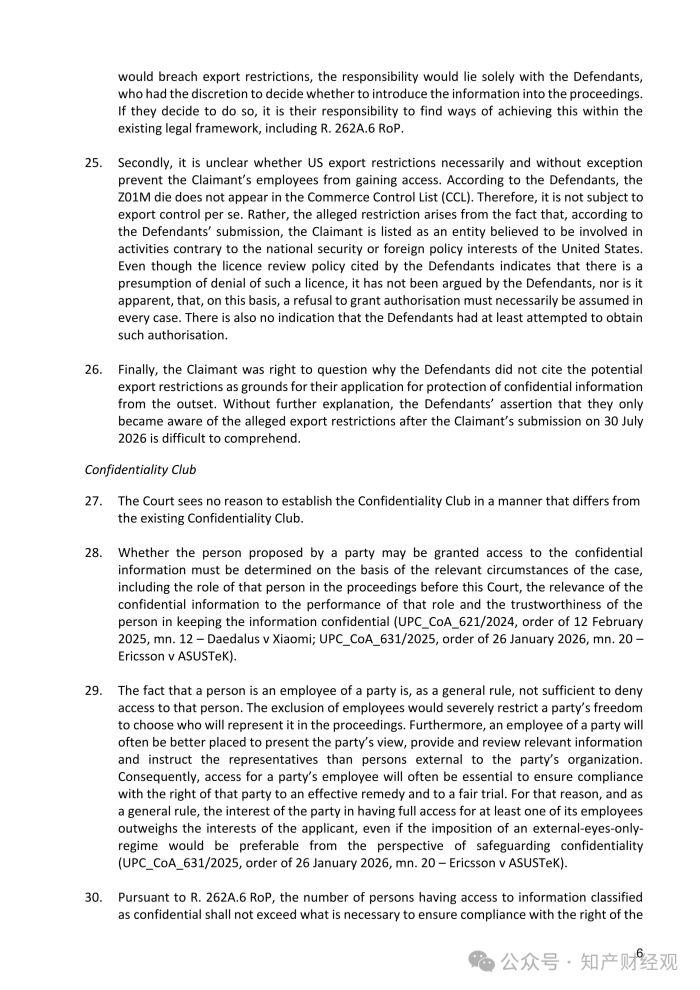
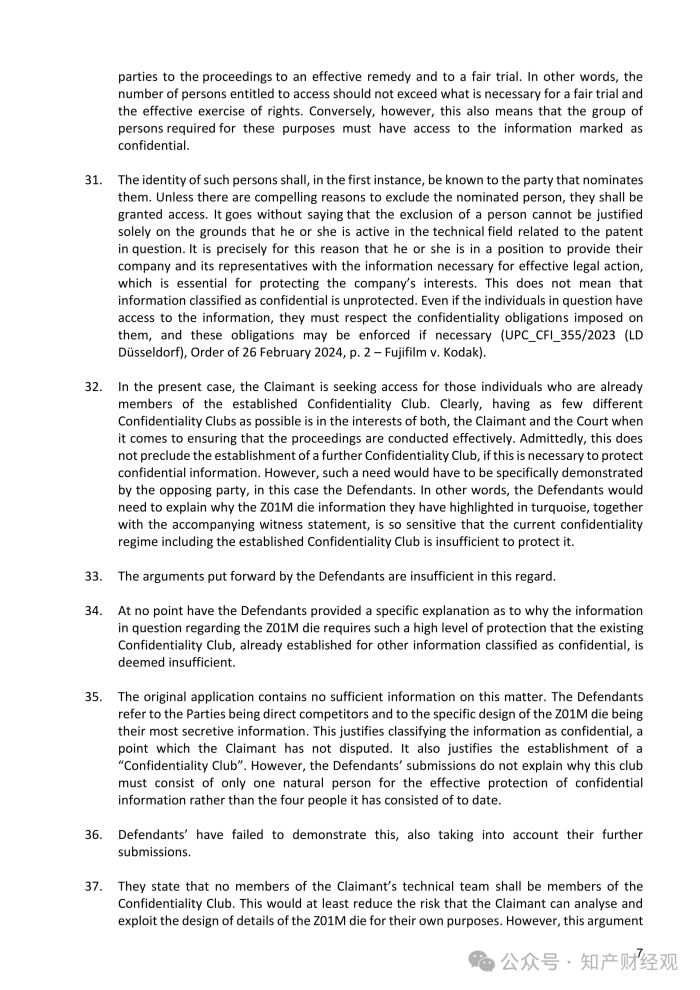
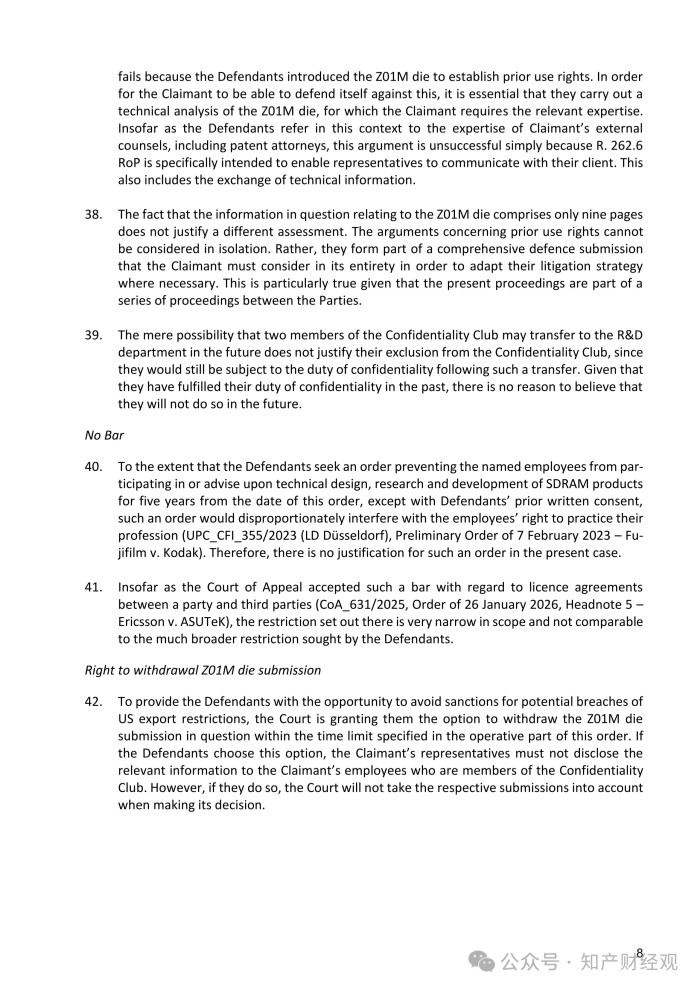
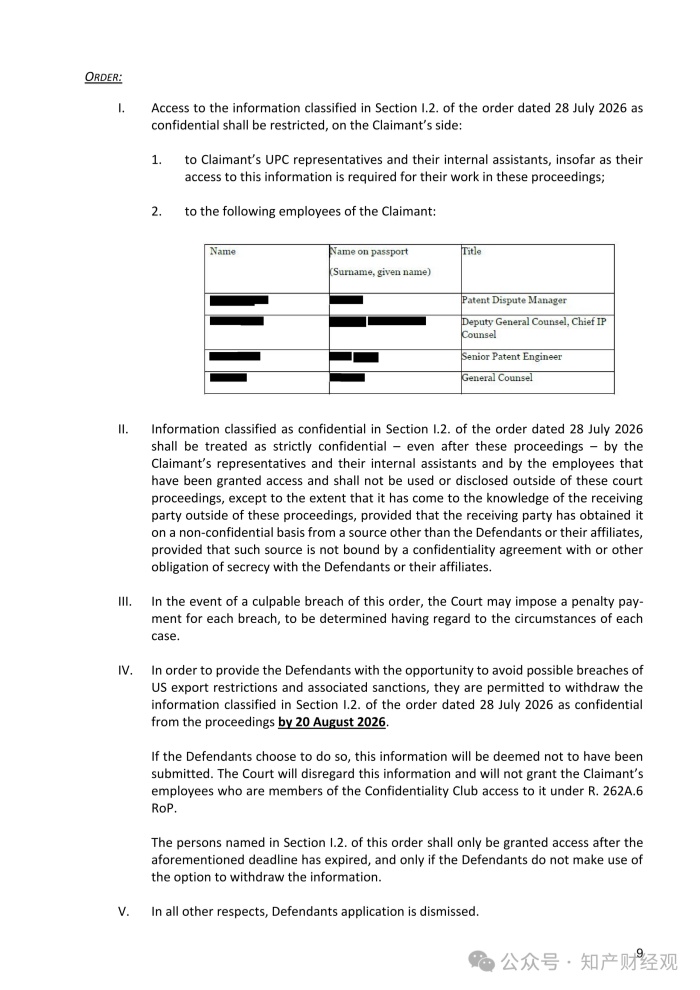
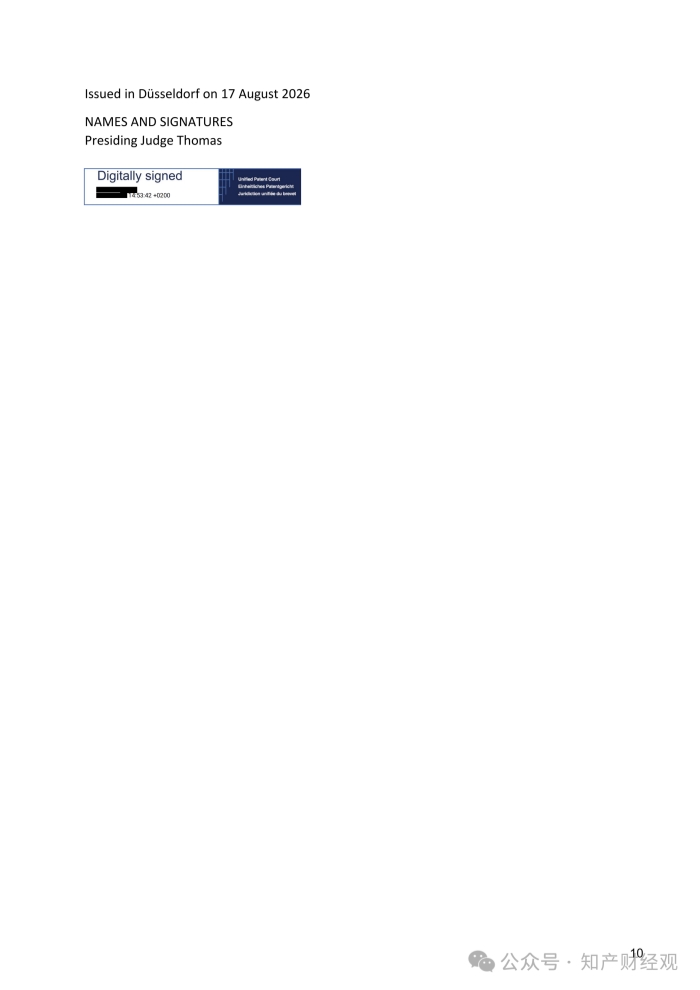
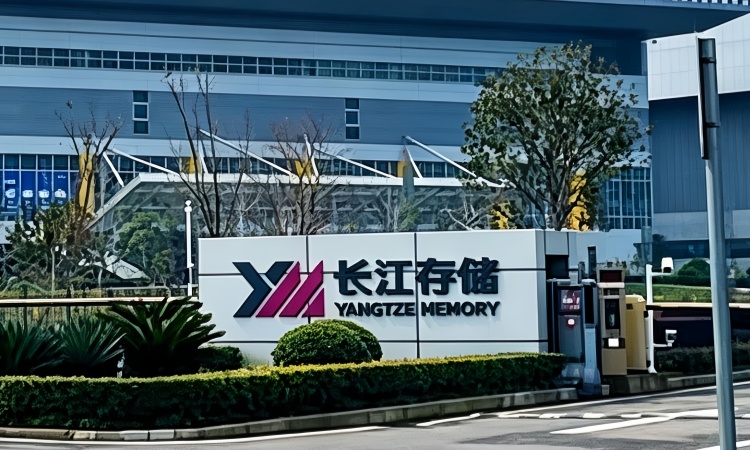
On August 17, 2026, the Düsseldorf Regional Division of the Unified Patent Court (UPC) issued a ruling in the case of Yangtze Memory Technologies Co., Ltd. v. Micron regarding infringement of European Patent EP 3 909 047: It denied Micron’s request to restrict access to technical information regarding the Z01M chip at issue to “attorneys only,” and also rejected Micron’s request to prohibit relevant employees of Yangtze Memory Technologies from participating in the design and research and development of SDRAM products for the next five years.
Case Background
On October 6, 2025, Yangtze Memory Technologies filed a lawsuit with the UPC against several entities under Micron, alleging infringement of its European Patent EP 3 909 047. On July 20, 2026, while filing its answer, Micron requested that two categories of information—“business data” and “specific technical details of the Z01M chip”—be kept confidential. Previously, on July 28, the court had approved confidentiality for both categories of information; however, the court ruled that the question of who could access the confidential information would be decided after further submissions from both parties. This ruling specifically addresses the issue of who may access the Z01M technical information.
In this ruling, Micron requested that access to Z01M information be strictly limited to Yangtze Memory Technologies’ external counsel and internal assistants, citing two reasons. First, Yangtze Memory Technologies had previously agreed to have external counsel independently evaluate technical information regarding another Micron chip, the Y52P, effectively waiving its right to direct access to such information; therefore, its current request for internal personnel to access Z01M details constitutes a contradiction; Second, Yangtze Memory has been placed on the U.S. export control “Entity List,” and disclosing Z01M technical information to it may require a license from the U.S. government. Since license reviews follow a “presumption of denial” principle, Micron argued that it is “legally prohibited from disclosing” such information.
As an alternative, Micron proposed limiting access to a single Yangtze Memory employee and required that the authorized employee not participate in or provide advice on the technical design or R&D of SDRAM products for five years from the date of the ruling.
Court Ruling
1. No “Lawyers Only” Restriction
Rule 262A.6 of the UPC Rules of Procedure stipulates that access to confidential information shall not exceed the scope necessary to safeguard the parties’ right to an effective remedy and a fair trial, and shall include at least one natural person from each party and their respective legal representatives.
The court held that if a party is a legal entity, it has the right to nominate internal personnel for the court to review regarding their access to confidential information; furthermore, access to confidential information by all natural persons on the legal entity’s side may be excluded only with their consent, and Yangtze Memory Technologies Co., Ltd. has explicitly objected to this proposal.
Regarding Micron’s assertion that “Yangtze Memory has waived the relevant rights,” the court held that Micron had conflated two distinct scenarios. With respect to the Y52P chip, Yangtze Memory independently decided whether to submit information subject to confidentiality obligations to the litigation and, accordingly, waived its right of access; thus, the initiative lay with Yangtze Memory; In contrast, in the present case, Micron proactively submitted the Z01M information to prove its prior use, whereas the confidentiality order seeks to restrict Yangtze Memory’s rights. The court held that, under these circumstances, only Yangtze Memory may decide whether to waive its right of access; if Yangtze Memory requests access at this stage, it does not constitute a contradiction but rather a normal exercise of the rights granted by the Rules of Procedure.
2. U.S. Export Controls Do Not Constitute Grounds for Refusing Disclosure
The court also rejected Micron’s export control defense, holding that:
First, whether information may be submitted in litigation and whether it is subject to export control restrictions should be determined and the responsibility borne by the party submitting the information, rather than resolved by the UPC through restrictions on the other party’s litigation rights. Since Micron chose to submit the Z01M information to the UPC proceedings, it must comply with the UPC’s procedural rules, including allowing at least one internal employee of Yangtze Memory Technologies to review the information.
Attached: Ruling