Google recently published the YouTube Copyright Transparency Report, detailing the platform’s copyright enforcement activities for 2025. The data reveals that YouTube processed approximately 2.503 billion copyright claims in 2025, marking a further increase from the approximately 2.2 billion claims recorded in 2024.
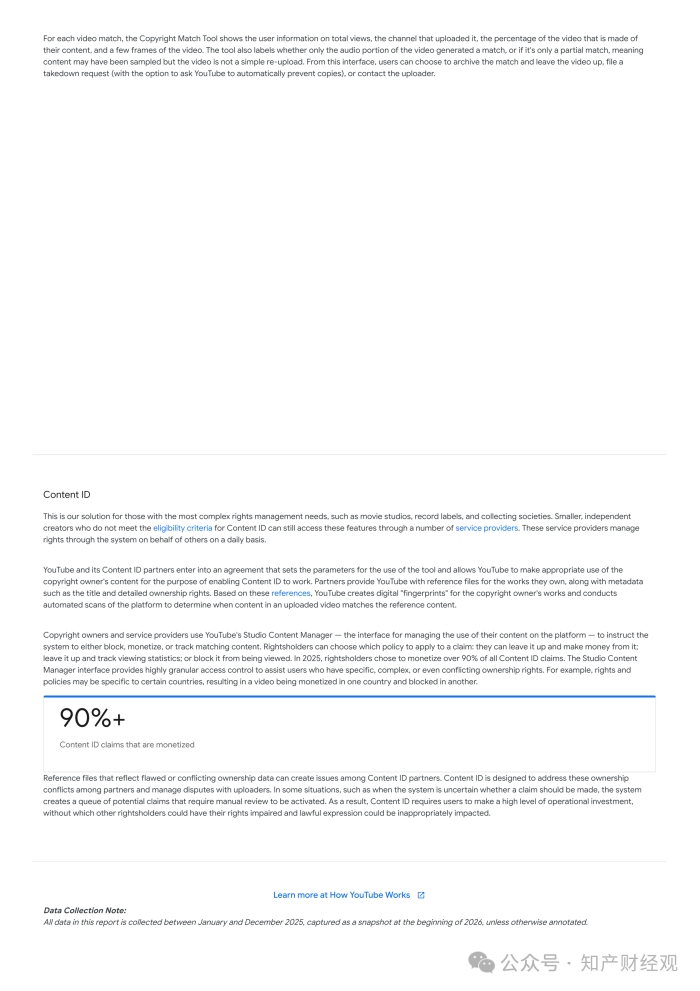
Content ID is an automated copyright management system launched by YouTube in 2007. It allows eligible rights holders to upload reference files, enabling the system to automatically identify matching material within content uploaded to the platform and, based on the rights holder’s settings, choose to block, track or monetise it. By the end of 2025, a total of 7,626 rights holders had been granted access to Content ID, of which 4,454 actually used the system during the reporting period.
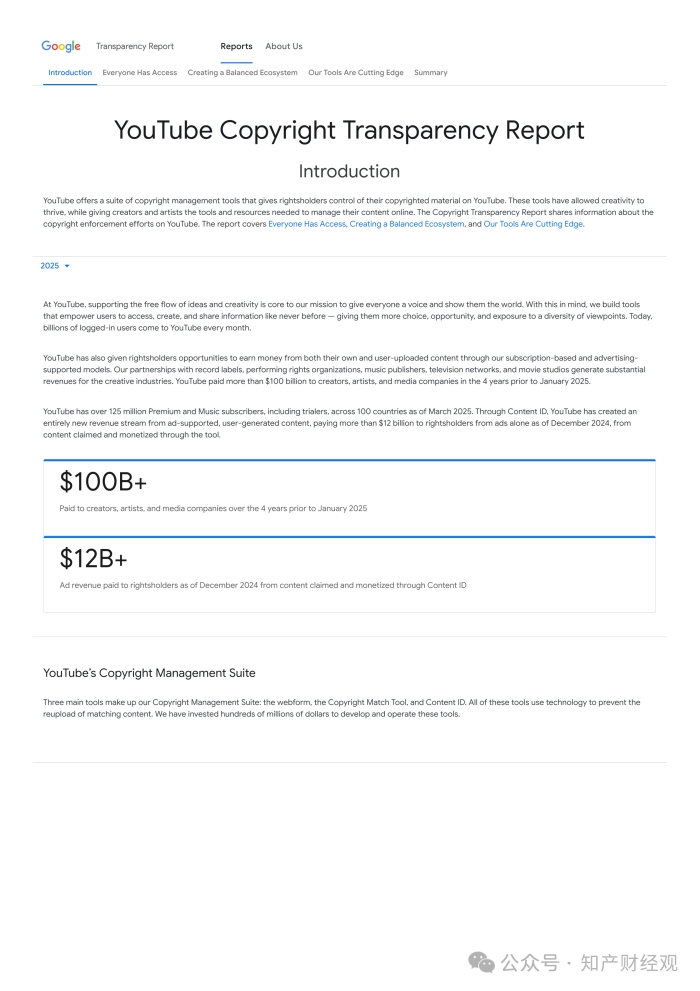
Content ID not only handles the bulk of enforcement work but has also become a significant source of revenue for rights holders. By the end of 2024, the system had distributed over US$12 billion in revenue to rights holders. In 2025, over 90% of Content ID claims were ultimately monetised by rights holders—that is, revenue was generated by placing advertisements in the relevant videos rather than requesting the platform to remove the content. Infringing content has thus been transformed from a mere target for removal into a sustainable monetisation opportunity.
In terms of operational efficiency, Content ID’s dispute rate stands at just 0.51%, far lower than the 1.43% dispute rate associated with manually submitted copyright claims; the vast majority of claims do not give rise to objections. In 2025, only 10,698 cases proceeded to further appeal procedures, with less than 1% ultimately reaching the litigation stage; disputes are largely resolved internally within the platform.
By contrast, issues of abuse on the platform are primarily concentrated in channels outside of Content ID. Among removal requests submitted via standard copyright complaint forms, over 6% were identified by the platform as involving ‘potentially erroneous copyright claims’, with the proportion of improper complaints significantly higher than that of other copyright management tools such as Content ID.
Appendix: Report