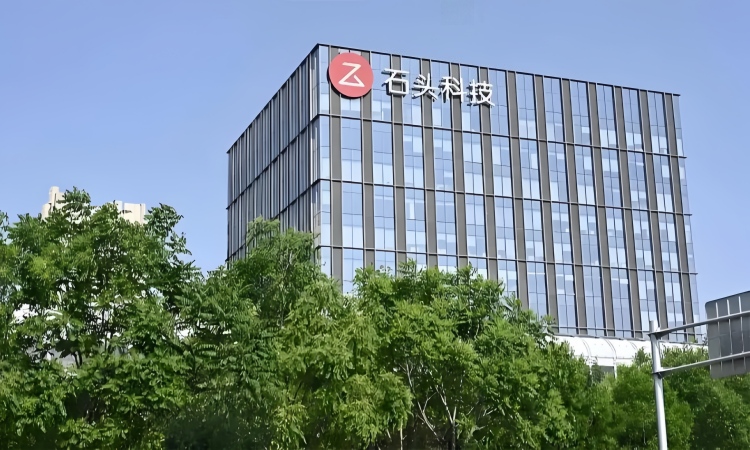
On March 16, the UPC Court of Appeal fully reversed the ex parte preliminary injunction order sought by Ecovacs against Roborock Technology. The court found that Ecovacs had failed to fulfill its obligation to fully disclose material facts when applying for the ex parte preliminary injunction order, constituting an abuse of process.
The UPC Court of Appeal upheld the previous revocation decision by the Düsseldorf Regional Court. The Court of Appeal noted that in its application for evidence preservation filed on September 2, 2025, Ecovacs intentionally omitted key information—namely, that the respondent, Roborock, was itself selling the products in question directly to German consumers through its Amazon store. The court held that this information was sufficient to influence the trial court’s judgment in deciding whether to issue an ex parte inspection order.
On September 2, 2025, Ecovacs, as the applicant, filed a motion with the Düsseldorf Regional Court requesting an emergency inspection and preservation of evidence regarding the robotic vacuum cleaners displayed at Roborock Technology’s booth at the IFA 2025 Berlin trade show. Ecovacs argued that Roborock’s place of business is in Hong Kong and it has no branches in Europe, making the trade show the “only opportunity” to prove that it was directly committing infringement and to obtain software code and internal technical documentation. On September 4 of the same year, the Regional Court issued an order for the preservation of evidence without hearing Roborock’s views, and authorized experts to inspect, test, and even seize the exhibits.
Subsequently, Roborock requested a review after the measures were enforced. On December 19, 2025, the Regional Division revoked the original inspection order. The Regional Division found that Ecovacs had, prior to filing the application, purchased the products in question directly from Roborock through its agent on the Amazon platform, and that this fact—which was reflected in a parallel main action filed almost simultaneously—had been deliberately omitted from the inspection application. The Regional Division held that had the court been aware of this sales channel at the time, it would never have issued the ex parte order. [Related Link: Translation of the Ruling | UPC Düsseldorf Court Revokes Ecovacs’ Ex Parte Preservation Order]
In its reasoning, the court explicitly stated that Rule 192.3 of the Rules of Procedure imposes a “heightened requirement” on applicants for ex parte measures, requiring them to disclose any “material fact” that could influence the court’s decision. The court held that Ecovacs’ statement in the application regarding “distribution through a German subsidiary” was “inconsistent with, or at the very least incomplete compared to,” its statement in the main complaint that “Roborock sells directly through Amazon.” The court emphasized: “These omissions and distortions are not trivial details, but facts of central importance to the Regional Division’s assessment of whether to grant the ex parte request.”
The court further noted that omissions regarding such core facts “cannot be remedied or circumvented through subsequent submissions in a request for review.” New arguments raised by Ecovacs in subsequent proceedings, such as those concerning “access to source code,” were disregarded by the court because they were not included in the original application.
Furthermore, the court rejected Ecovacs’ request to refer the matter to the Court of Justice of the European Union (CJEU), holding that the core issue of this case concerns the fulfillment of procedural disclosure obligations, rather than the interpretation of substantive provisions of EU directives. The court emphasized that the UPC cannot request the CJEU to interpret its own procedural rules.
Meanwhile, Ecovacs is also facing infringement cases at the UPC against PAPST LICENSING and Roborock.
Scan the QR code to access the full text of the ruling