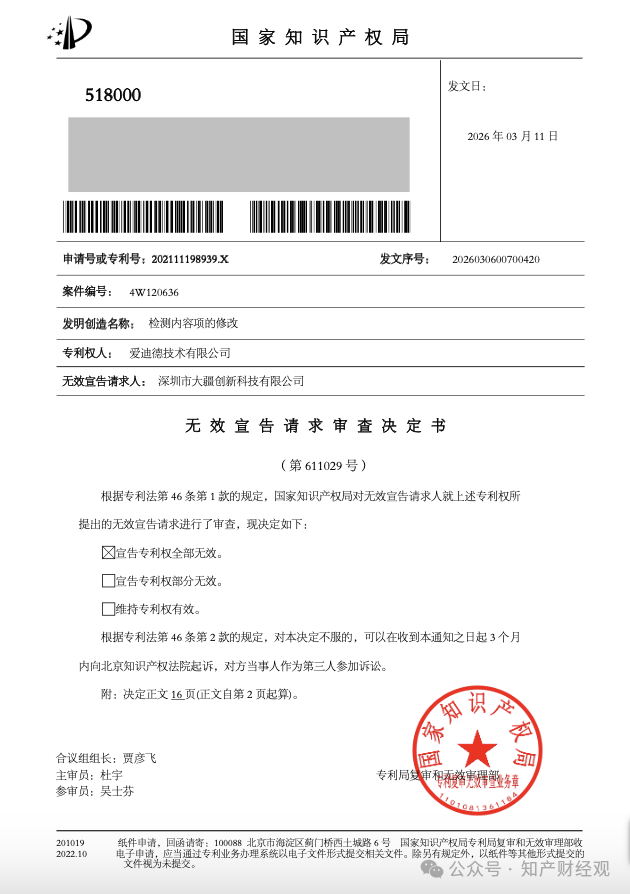
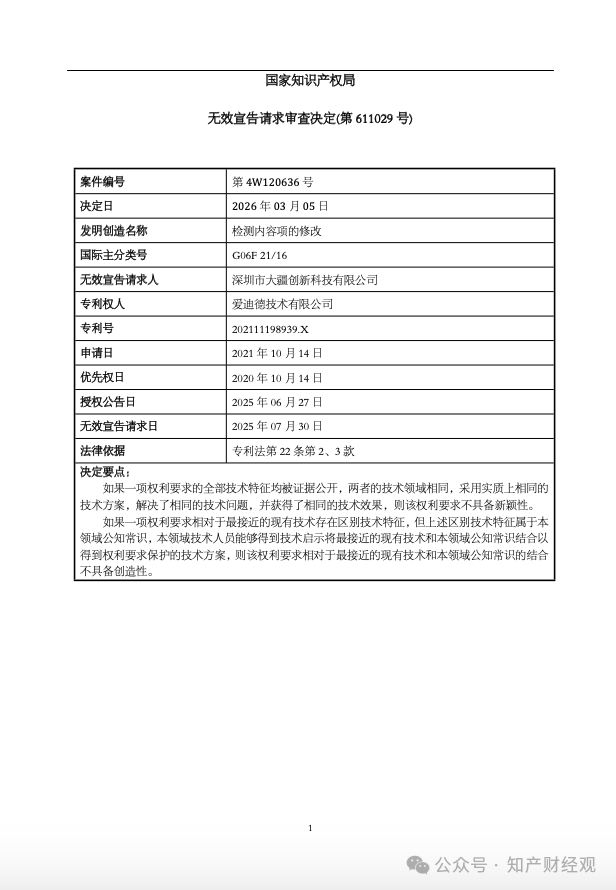
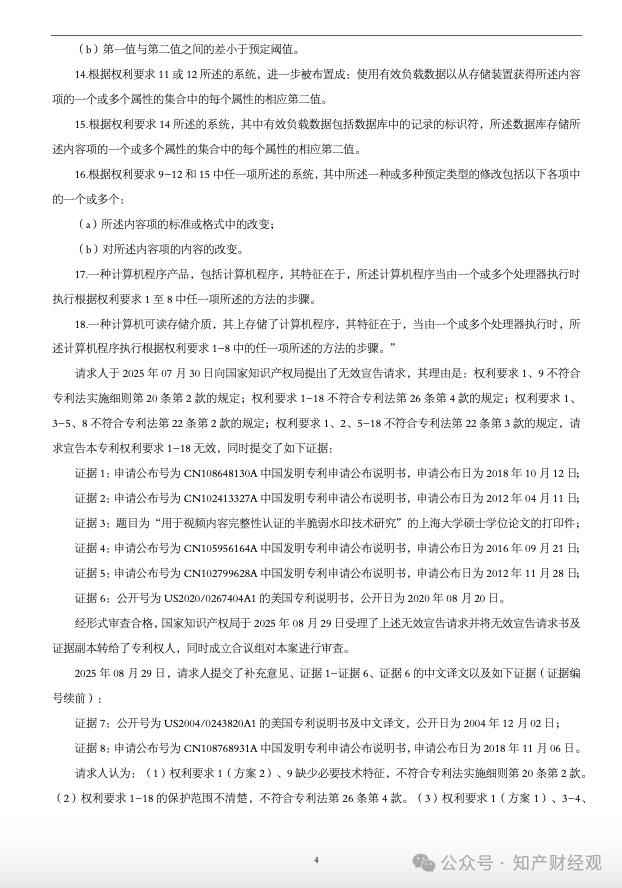
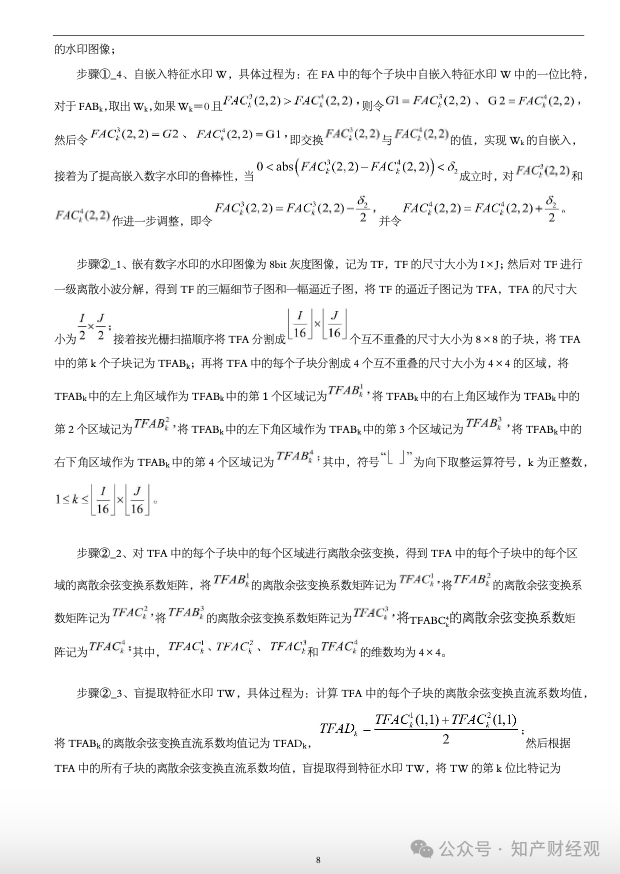
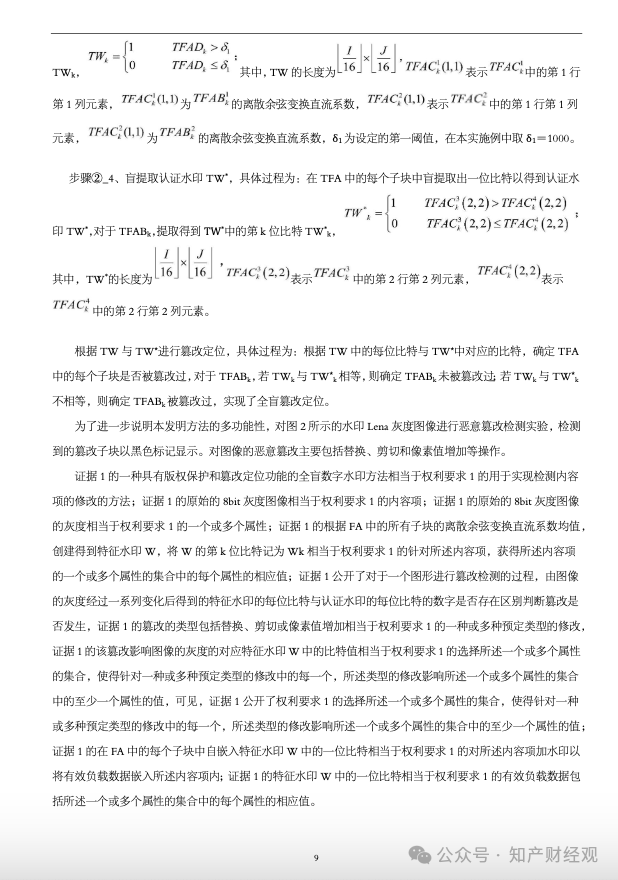
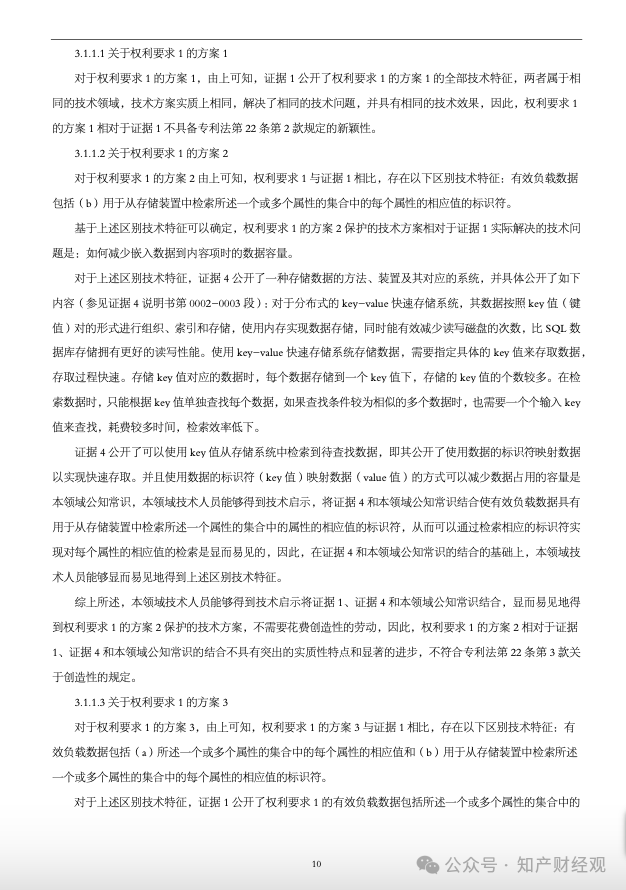
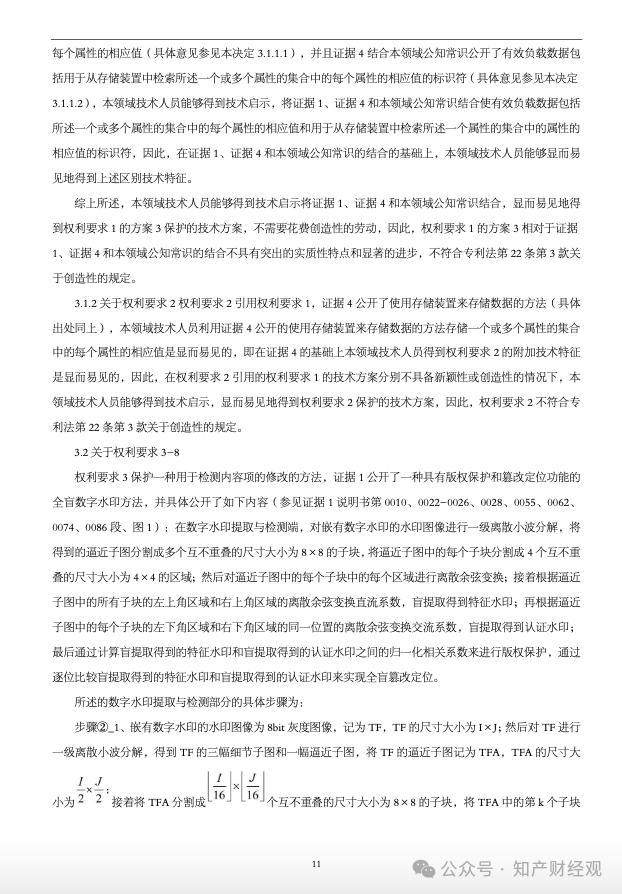
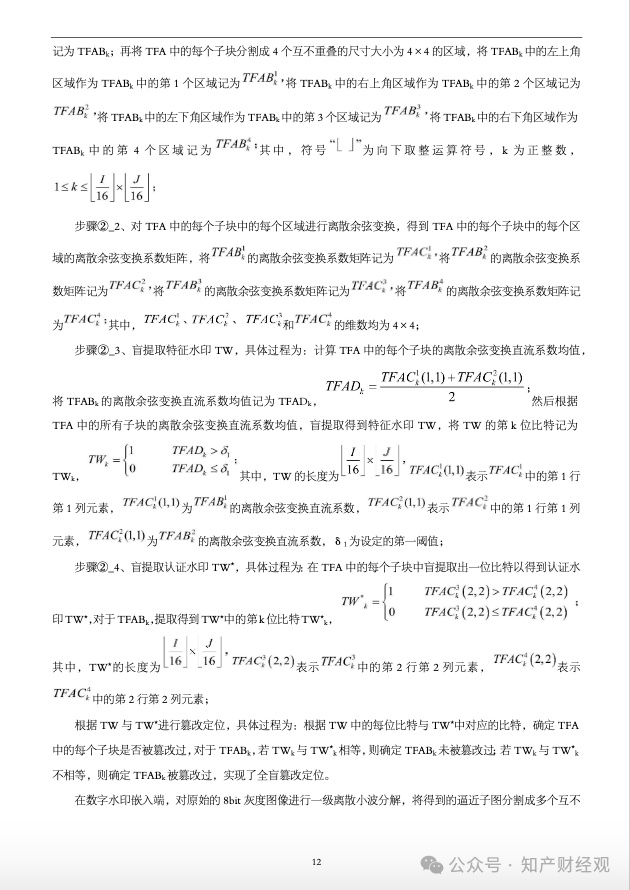
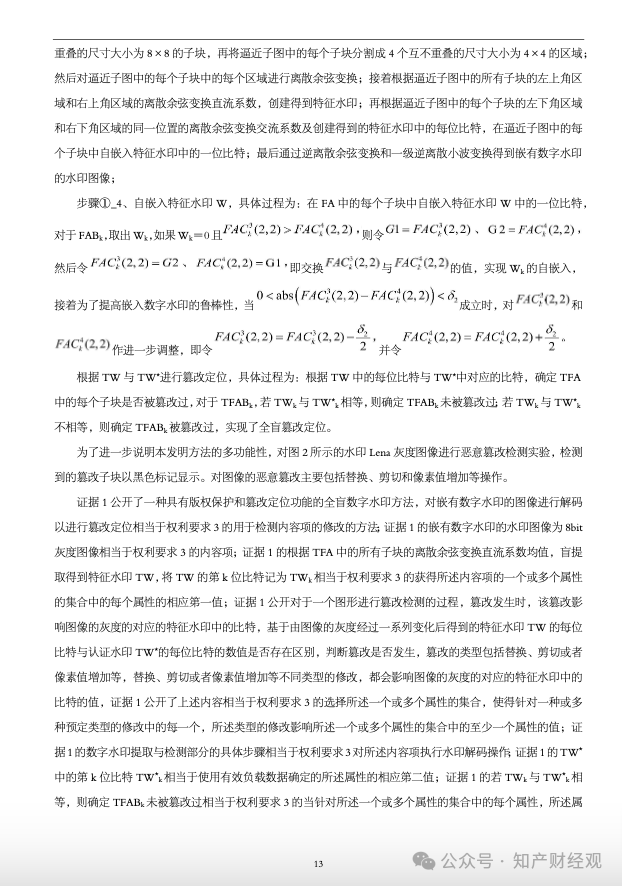
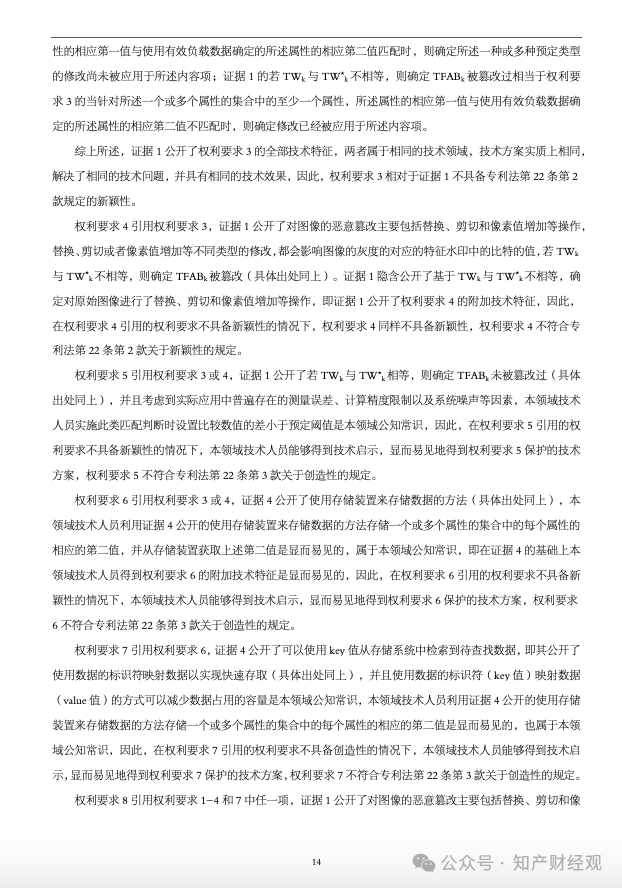
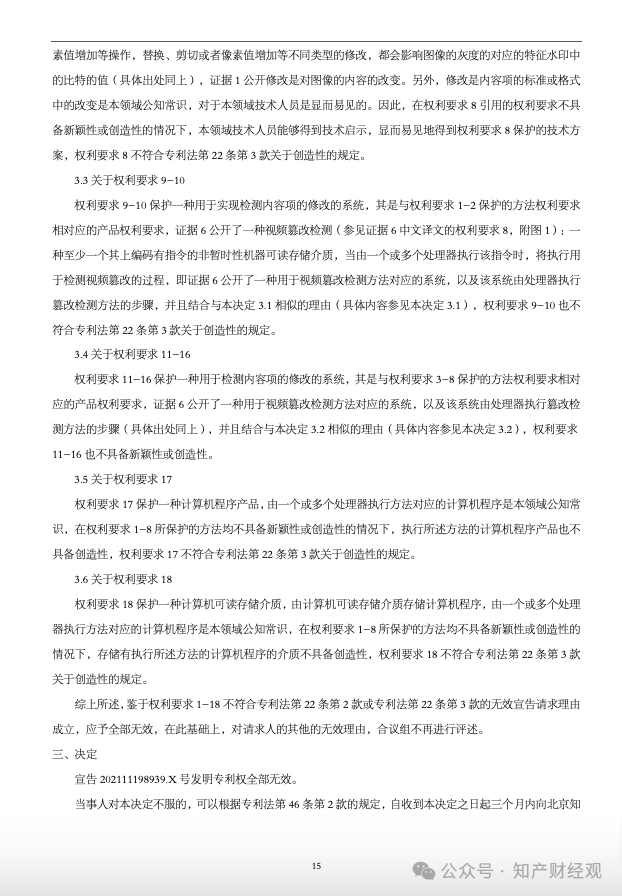
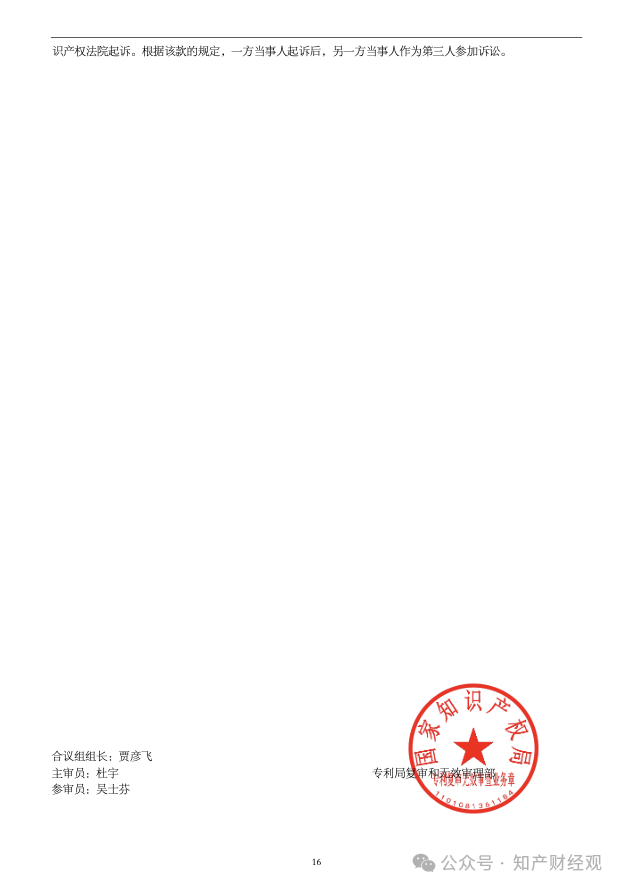
On March 11, 2026, the China National Intellectual Property Administration issued Decision No. 611029 on the Examination of a Request for Declaration of Invalidity. This decision concerns a request filed by Shenzhen DJI Innovations Technology Co., Ltd. (hereinafter referred to as “DJI”) against the patent titled “Modification of Inspection Content Items” (Patent No. 202111198939.X) owned by Aide Technology Co., Ltd. (hereinafter referred to as “Aide”). The decision declares the entire patent invalid. titled “Modification of Detection Content Items,” issued a final review decision declaring the entire patent invalid.
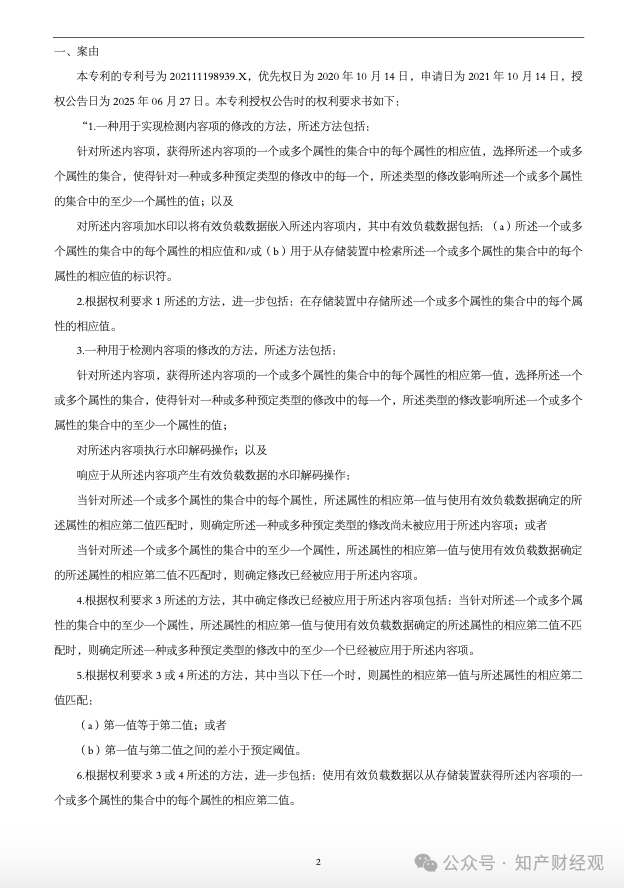
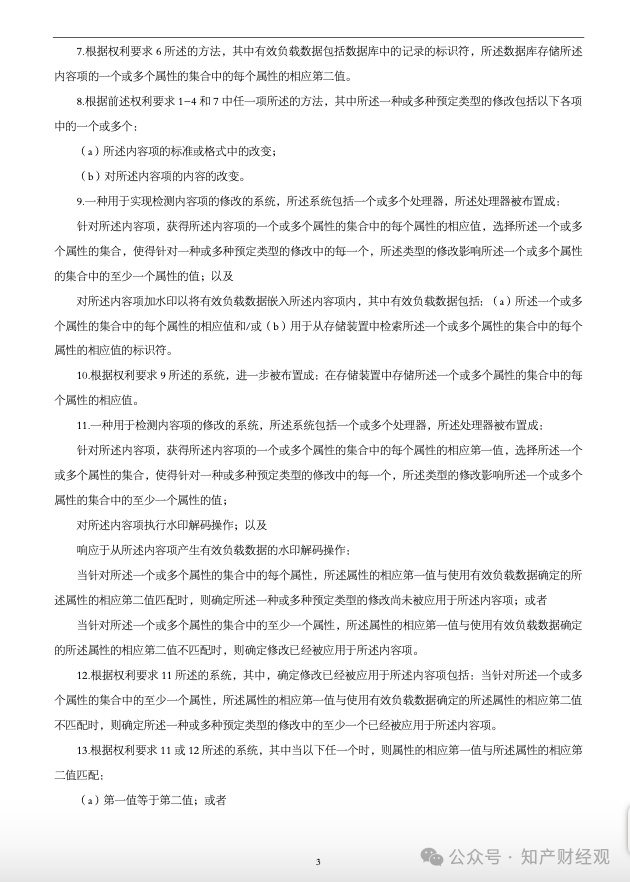
It is reported that the patent in question was filed on October 14, 2021, with a priority date of October 14, 2020. It was granted and published by the CNIPA on June 27, 2025. Its international main classification is G06F21/16, falling within the field of digital watermarking and content security detection technology. At the time of grant announcement, the patent comprised 18 claims. Its scope of protection encompassed two core methodological solutions: methods for detecting modifications to content items and methods for modifying content items. It also covered corresponding execution systems, computer program products, and computer-readable storage media. The core technical logic involved embedding watermark data containing attribute values or corresponding retrieval identifiers into content items to enable the identification and detection of predefined modification behaviors on such items.
According to the decision on disclosure, the panel of examiners at the China National Intellectual Property Administration determined:
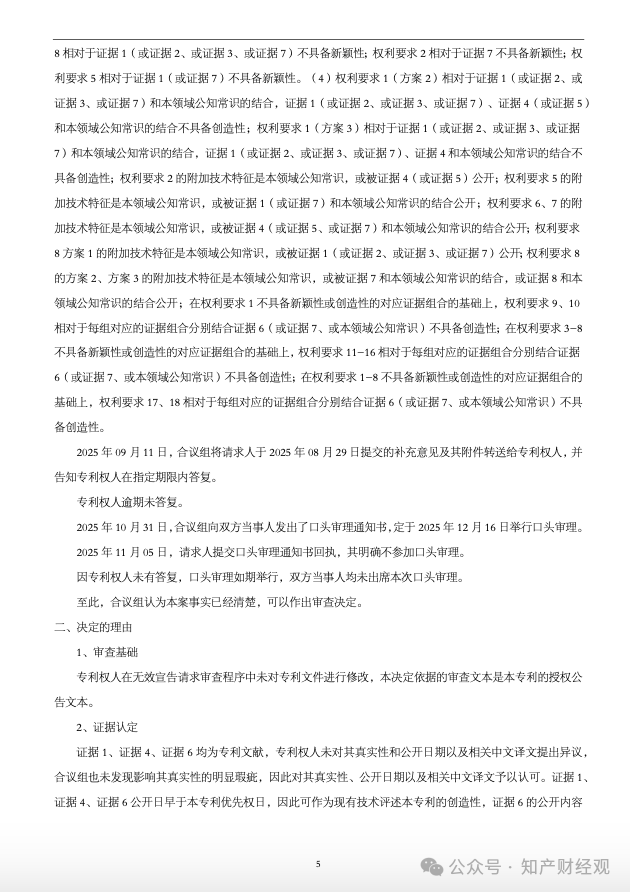
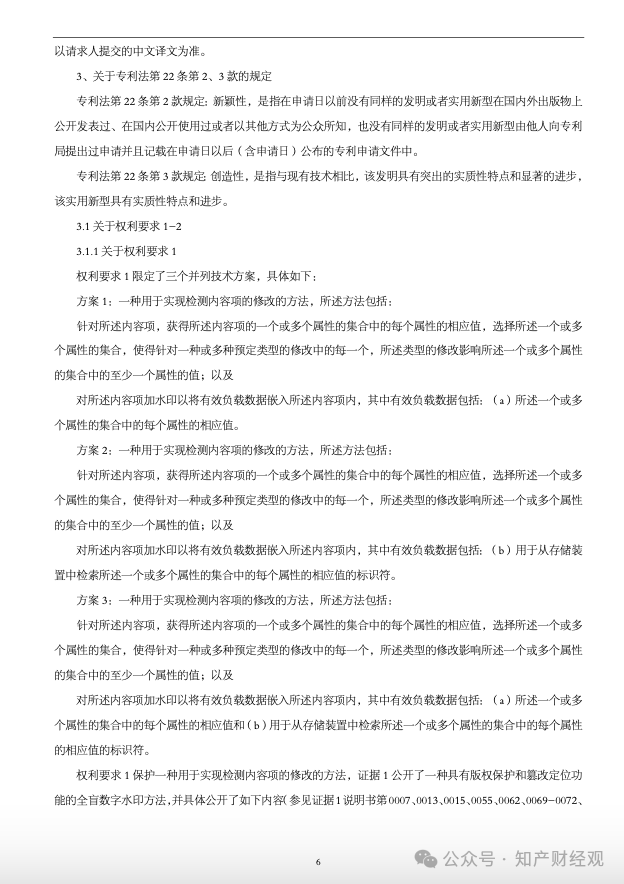
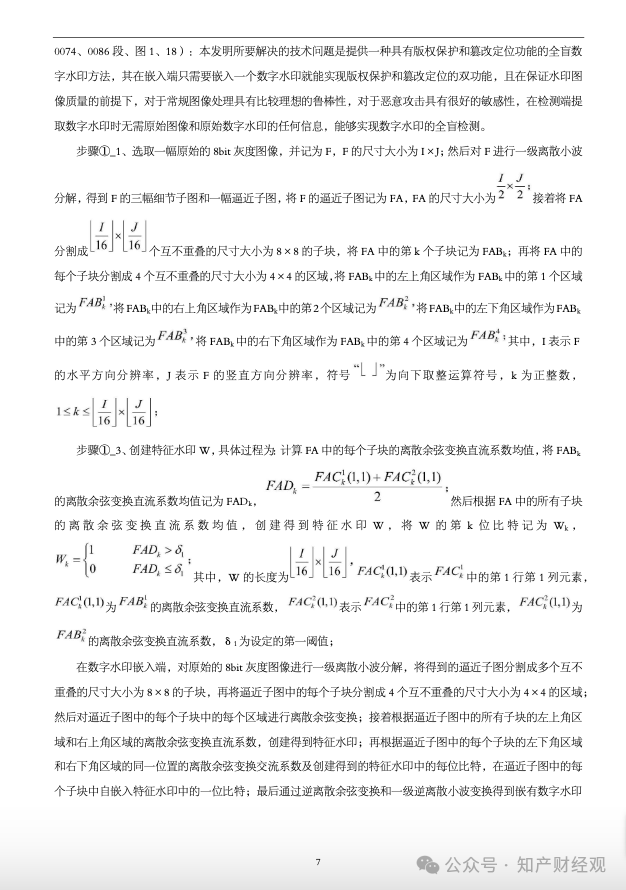
Lack of novelty: The core technical solution of the involved patent is completely covered by prior art disclosed earlier. Specifically, the core implementation of Claim 1, along with all technical features of multiple independent claims including Claims 3 and 4, were fully disclosed in Prior Art Evidence 1 with a publication date of October 12, 2018. Both belong to the same technical field, employ substantially identical technical solutions, address identical technical problems, and achieve identical technical effects, thus failing to meet the novelty requirements under the Patent Law.
Lack of Inventive Step: For the remaining claims with distinguishing technical features, such distinguishing features either constitute common knowledge within the relevant technical field or have been disclosed by other prior art evidence. A person skilled in the art could arrive at the technical solutions of the patent in question through the combination of existing technology and common knowledge without requiring any creative effort, thus failing to meet the requirements for inventive step under the Patent Law.
Ultimately, the panel of examiners at the China National Intellectual Property Administration issued a review decision, determining that claims 1-18 of the patent in question all failed to meet the requirements for novelty and inventive step under Article 22(2) and (3) of the Patent Law of the People's Republic of China. DJI's grounds for requesting invalidation were upheld, and the invention patent No. 202111198939.X was declared invalid in its entirety in accordance with the law.
Case Background
On April 15, 2025, EDI filed a patent infringement lawsuit against DJI and its European subsidiaries in the Unified Patent Court (UPC), alleging that DJI drones infringed its core safety patent EP2831787 (Case No.: UPI_CFI_344/2025).
On August 14, 2025, DJI filed a counterclaim for patent invalidation with the UPC, seeking revocation of Edie's EP2831787 patent. This case was consolidated with the infringement action, with a hearing scheduled for April 2026 (Case No.: UPC_CFI_735/2025);
On August 29, 2025, DJI filed patent invalidation requests with the China National Intellectual Property Administration (CNIPA) against four Irdeto patents (Patent Nos.: 2013800751023/2014800820507/2014800794235/202111198939X);
October 24, 2025: DJI filed a patent infringement lawsuit in the U.S. District Court for the Eastern District of Texas against Irdeto B.V. (Irdeto's parent company) and Irdeto Security B.V., alleging infringement by their Keystone system products (Case No.: 2:25-cv-01066);
On November 5, 2025, DJI filed a patent infringement lawsuit against Irdeto in China, targeting Realtek Semiconductor's RealTek RTD1319D chip equipped with Irdeto hybrid middleware. The claim likely pertains to video encoding patents involving methods and apparatus for processing video images.
On January 7, 2026, the China National Intellectual Property Administration (CNIPA) invalidated all claims of Edid's patent “Interrogation-Response Method and Associated Client Device” (ZL201380075102.3).
On February 6, 2026, AidiDe filed a declaratory judgment action against DJI in the U.S. District Court for the Eastern District of Michigan, seeking a court ruling that AidiDe's products do not infringe DJI's patents (Case No. 2:26-cv-10431);
On March 11, 2026, the China National Intellectual Property Administration (CNIPA) determined that AidiDe's patent No. 202111198939.X lacked novelty and inventive step, declaring it entirely invalid.
Attached Decision